Take Five! Meet the first teachers appointed in South Africa

Vida Li Sik • August 24, 2019

From zero ... to five

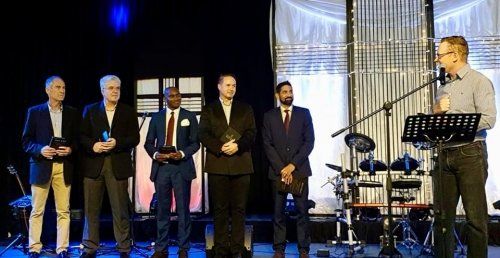
Let's meet the first teachers in South Africa, who were appointed in Johannesburg last weekend. Neil Trollip, Werner Reyneke, Solly Kganyago, Paul Smith and Raj Chandra were tasked with the responsibility of teaching God's Word to his people.
Their appointment was met with great excitement by their families and the church in Joburg, and all five are fired up about their new roles.

Here's a closer look at who they are.

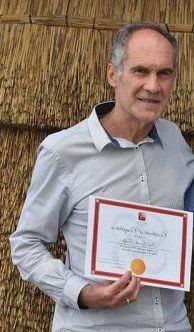
Neil Trollip was baptised in Port Elizabeth (Eastern Cape) in 1997 and has been leading the church in that city on a voluntary basis for 12 years, with his wife Noeleen. The couple has been married for 37 years and have three children. Neil worked as the R&D manager of a large research organisation until his retirement from his secular job in December last year. A keen scholar of the Bible, Neil was one of the first graduates of the Ministry Training Academy (MTA) in South Africa in 2017. He is currently pursuing a master's degree at the Rocky Mountain School of Ministry and Theology (RMSMT). "I'm now genuinely in the full-time ministry and enjoying it immensely. I'm also excited to study further and deepen my Bible knowledge to be better equipped to teach," he shared.

Werner Reyneke

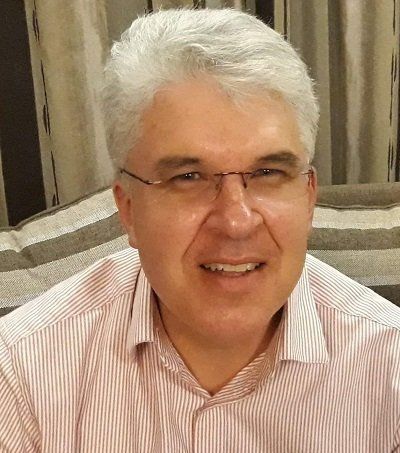
Werner Reyneke's appointment as a teacher was an early present  as he celebrated his birthday this week. Baptised in 1994 while a student at the University of Johannesburg, Werner married Madelyn 23 years ago and they have a son, Martin. A civil engineer by profession, Martin also serves as a kidzone teacher, deacon of benevolence and as the chairman of the church board. Werner graduated from MTA in 2017 and earned an MA in Bible and Theology from Lincoln Christian University in May this year. "I'd love to help the church grow in their love for the Bible and am humbled by this opportunity to serve my brothers and sisters," he said.
Solly Kganyago

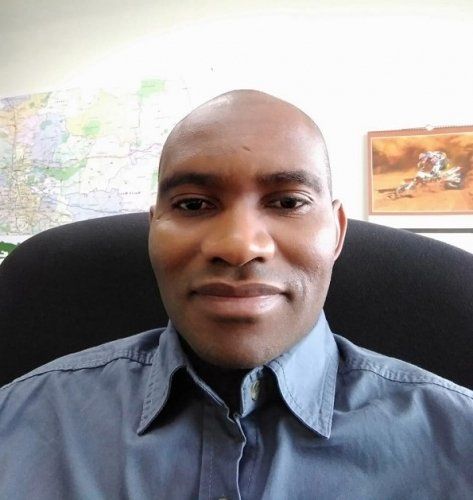
Solly Kganyago says he's always had a passion for self-improvement and that applies to spirituality too. Baptised in the East Region  in 2003 and married since 2005, Solly works as a commercial manager and serves as a family group and worship leader. He is also on the property and financial committees of the Joburg church.


Solly said this about his new responsibilities: "For me, discipleship is all or nothing. I believe in using my gifts for the benefit of others. My family was extremely excited and encouraged by my appointment as a teacher. My peers are proud and encouraged by the growth they've seen in me over the years, and my love for God and his church."


He says the scripture that sums up how he feels about the task ahead is James 3:1 "Not many of you should become teachers, my fellow believers, because you know that we who teach will be judged more strictly." (NIV)
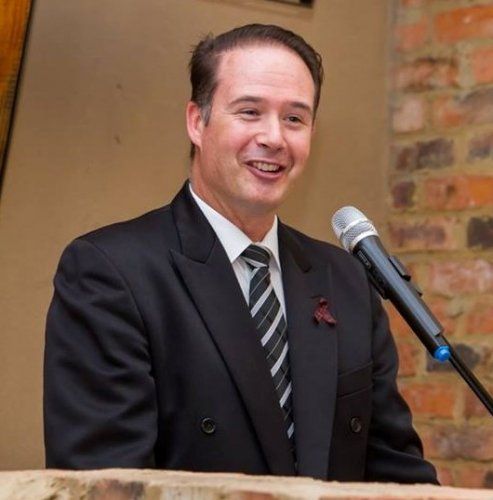
Paul Smith

Paul Smith has been a disciple for 20 years and currently oversees the East Region of the church in Joburg. He also graduated from MTA in 2017 and also currently pursuing a master's degree through the RMSMT.


Paul is married to Jacqui and the father of two girls. He summed up his thoughts about the role of a teacher. "As a young Christian I was always drawn more to the 'deeper' side of things. God put on my heart the dream to see a teaching ministry established in South Africa, and it amazes me how God has brought that to fruition this year.  I'm indebted to Mike Taliaferro, Michael Burns, Dave Pocta, Douglas Jacoby, Duncan Comrie and Justin Renton for their training over the years to realise this goal," he said.


 His encouragement to anyone thinking of becoming a Bible teacher is this:

"Pursue humility always (Philippians 2), gain a sober view of yourself (Romans 12:3) by inviting honest input into your life with regards to your character, strengths and weaknesses.  Engage in the ministry; a good practical knowledge of working with people keeps you grounded, develop yourself through further study but don't be eager to teach too soon. There's a burden of responsibility that comes with this role, for which you'll be held to a higher level of accountability. Lastly, persevere. God's timing is always right," Paul added.
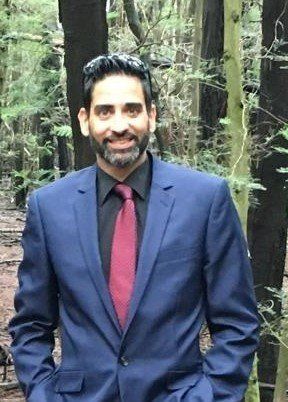
Raj Chandra

And last, but not least, Raj Chandra, has taken a long route to finally end up in Africa. Born in India, he was baptised in Milwaukee, Wisconsin (US) in 2001. He is also an MTA graduate and is currently serving the campus and singles ministries in the Tshwane Church of Christ in Pretoria. He is married to Angie and the father of a young boy.


Raj is humbled by his appointment as teacher. "It's surreal even now to think I was formerly Hindu-born and would never have imagined I would submit to Jesus as King and be added into his family. He blessed me with the gift of teaching and I'm very grateful to God and all the people who poured into me. I'm looking forward to seeing how God will use this new role to help many connect with Him and each other, and to build healthy communities rooted and built up in Christ."

Congratulations to all five brothers. We look forward to learning from you!

More from the International Church of Christ

By Justin Renton September 2, 2026
The physics of the pendulum Picture an old grandfather clock in a quiet hallway. Its long brass pendulum swings steadily: tick, tock, tick, tock. Now give that pendulum a hard shove to the right. It does not simply glide back to the center and stop. It races right past the middle and sways just as far to the left. Left to its own momentum, a pendulum never rests at either extreme; it finds peace only when it hangs still at the center, held by gravity and its fixed point. The church behaves in much the same way. Push her too far toward one side of a truth and she does not gently settle into balance, she swings. Often for a whole generation toward the opposite error, and then back again, wounding people at both ends of the arc. And here is the crucial thing the clock teaches us: the pendulum comes to rest not by being frozen in place, but by being held. Balance is not the absence of force; it is the fixed point that keeps opposing pulls in tension so that the weight can finally hang still.
By Justin Renton August 4, 2026
In the messy arena of human relationships, whether in marriage, the workplace, church family, or the volatile world of online discourse, we constantly feel the pull of opposing forces. One voice urges us to defend truth fiercely; another calls us to extend grace generously. This is the divine tension of disagreement: holding both conviction and compassion without letting go of either. Today, we turn to a passage that cuts to the heart of how we handle differences: “My dear brothers and sisters, take note of this: Everyone should be quick to listen, slow to speak and slow to become angry, because human anger does not produce the righteousness that God desires.” – James 1:19-20 (NIV) James, writing to scattered believers across the nations, doesn’t offer fluffy advice. He gives a practical, counter-cultural blueprint for godly relationships: Be quick to listen. Slow to speak. Slow to anger. These aren’t suggestions for better conversations; they are directives for producing the righteousness God desires. This passage applies to husbands and wives, children and parents, bosses and workers; everyone from the pulpit to the pew. We all need to train ourselves to be better listeners. The divine tension in James’ command Here lies the tension: Listening requires humility and self-control, while speaking (especially in defense of truth) feels urgent. Anger can arise when we perceive injustice or error, yet James holds these in balance. We must lean into listening first, restrain our tongues, and guard our hearts against hasty wrath. Why? Because “human anger does not produce the righteousness that God desires.” This isn’t a ban on all anger; Jesus displayed righteous anger in the temple (John 2:13-17). But human anger, tainted by our flesh, tends toward self-justification, escalation, and sin. It rarely births the fruit of the Spirit. The tension calls us to slow down enough for the Holy Spirit to lead, rather than our adrenaline. What science reveals about anger and “hearing” Modern neuroscience echoes what James knew by inspiration. When anger flares, our brain undergoes an “amygdala hijack.” The amygdala, the brain’s alarm system tied to fight-or-flight, floods the body with adrenaline and cortisol. This redirects resources: our heart rate spikes and oxygen flows to muscles for action, but our higher reasoning centers in the prefrontal cortex – responsible for judgment, empathy, and nuanced thinking – get suppressed. In this state, our ability to truly “hear” another person diminishes dramatically. Active listening, the tool that clarifies, disarms, and seeks understanding, becomes nearly impossible. We filter everything through threat detection, empathy drops, and we stop processing the other’s words for their actual meaning. Instead, while they are still speaking we start crafting rebuttals or counterattacks. This explains why conflicts escalate so quickly: we literally cannot hear well when flooded with anger. James’ call to be slow to anger is not just spiritual wisdom; it aligns with how God designed our brains to function best when governed by self-control rather than unchecked emotion. Recognizing our physiological limits isn’t about suppressing feelings, it’s about guarding our capacity for reason so we don’t accidentally sabotage the very justice we seek to defend. Even if the other person is operating out of a completely hijacked, high-emotion state, our calling to maintain self-control and clear thinking remains. When our prefrontal cortex goes offline, our hijacked brain defaults to intellectual shortcuts. This emotional flooding is precisely what predisposes us toward constructing caricatures, like the straw man, rather than engaging with the actual person.
By Justin Renton July 29, 2026
From July 19-26, 2027, DT Travel invites parents and their teenage or older children for an unforgettable journey to Mount Kilimanjaro, the highest peak in Africa.
Show More