A Letter of Thanks from Ukraine
Zach F • January 21, 2015
Shawn Wooten, lead evangelist for the International Church of Christ in Kiev, Ukraine, sent us this update: Dear Family around the World, as New Years always inspires us to reflect with thankfulness and dream of what God can do in the future... I am overwhelmed with the picture God has given me of our fellowship this last year! Thank you God!
Romans 8:37-39
No, in all these things we are more than conquerors through him who loved us. For I am convinced that neither death nor life, neither angels nor demons, neither the present nor the future, nor any powers, neither height nor depth, nor anything else in all creation, will be able to separate us from the love of God that is in Christ Jesus our Lord.
Thank you God - that absolutely nothing can separate us from you! There is no circumstance, no situation, nothing that can happen on this planet or to us personally that can separate us from the love God has for us!
2014 will go down in my book as the most challenging year yet... in my 24 years in Christ. I thank God for the strength he provides from reading his word, and through prayer and fasting. Concerned for my country ( Ukraine ) and concerned for the hearts of the disciples... I was motivated in 2014 to spend 140 days fasting for God to bring peace and righteousness. That God would bring spiritual fruit and souls saved. I know so many of you have fasted and prayed and sacrificed.
It is impossible to understand on this side of eternity how much impact you have had, but I wanted to say thank you! There is no blessing greater than a relationship with God. May we always invest first and our very best in this relationship, may we protect it and cherish it, may it provide us always with the strength to fight the spiritual battles that are before us!
Thank you Brothers and Sisters around the World!
I am so encouraged by the outpouring of encouragement, prayer, fasting and financial sacrifice that churches all over the world have done to encourage the churches in the Ukraine. We are so thankful, and we want you to know how much we have felt God's love through you! Thank you for the sacrifice. Thank you for the Prayers! Thank you Roger Lamb, Michael Taliaferro for communicating with the churches around the world and for your support. For the role Disciples Today and ICOC Hot News plays to keep us all connected.
God has blessed the Ukrainian churches through the fund raising that was provided by you! We are facing unprecedented financial challenges in our country and your support will be invaluable as we continue to build the churches in the Ukraine! Thank you so much!
Amongst all the challenges, God has still blessed the churches in the Ukraine with the second best year of growth that we have had in the last 10 years! Thank you for all the prayers for us, as I believe the prayers from around the world, have led us to a greater harvest!
Praise God!
Please keep the churches in the Ukraine in your prayers! Pray for boldness to preach God's love! Pray for peace in our hearts as we are facing so much instability. Please pray for peace in the Ukraine that all fighting will stop. Pray for healing and unity, that our relationships in the kingdom will be strong.
Thank you and may God bless you in 2015!!!
- Shawn Wooten
More from ICOC HotNews:
Festival de las Americas 2015 kicking off on May 24th
Brits Invade Life-Changing Worship
MLK Day 2015: Volunteers Step Up To Serve Their Neighbors
SWAMP shares their ambitious 5 year plan!
More from the International Church of Christ

Imagine you are at a neighborhood barbecue. Your new neighbor arrives late, dressed casually, and barely speaks. Someone whispers, “She thinks she’s too good for us.” You feel the quick sting of that snap judgment. Later, you learn she just lost her husband and is quietly grieving. In that moment, you sense the discomfort of judging wrongly, a rush to conclusions that harms relationships and reveals more about our own hearts than the other person. Yet, the same evening, when another guest makes a racist joke, you feel an inner nudge to speak up. Is that also “judging”? This everyday tension captures what Jesus presents in Scripture: a divine balance between grace-filled restraint and righteous discernment. The two commands in tension “Do not judge, or you too will be judged.” – Matthew 7: “Stop judging by mere appearances, but instead judge correctly.” – John 7:24 At first glance, these seem contradictory. Don’t judge. Judge correctly. Which is it? Matthew 7 warns against a critical, hypocritical spirit that condemns others while ignoring our own faults. The context continues: “For in the same way you judge others, you will be judged, and with the measure you use, it will be measured to you” (Matthew 7:2). Jesus then uses the vivid image of someone with a plank in their own eye trying to remove a speck from another’s. Notice the aim: “then you will see clearly to remove the speck.” Self-examination is not a reason to stay silent. It is how we become safe enough to speak (Matthew 7:3-5). John 7, however, shows Jesus defending his healing on the Sabbath. He challenges the religious leaders: stop superficial, appearance-based judgments and instead apply right, truthful judgment aligned with God’s character and Word. This is not a contradiction but a divine tension, two truths that must be held together. We are called to humility and self-examination (do not judge harshly or hypocritically), while also exercising discernment and moral clarity (judge correctly, according to truth). Christianity rejects both naive permissiveness (“anything goes, no one can say anything”) and harsh legalism (constant condemnation without grace).

Here are answers to some frequently asked questions about next year’s trip to Mt. Kilimanjaro.
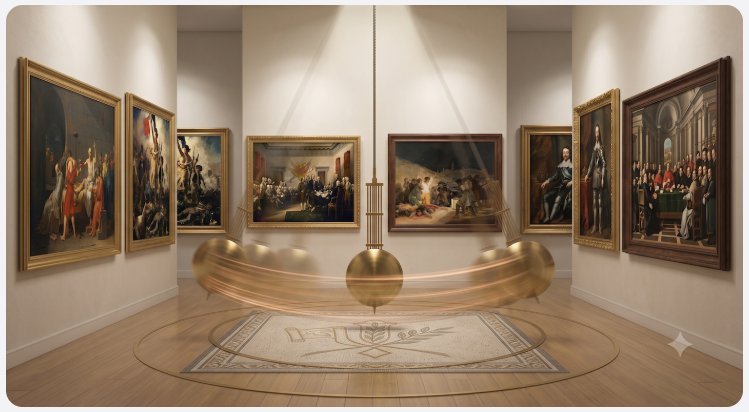
The physics of the pendulum Picture an old grandfather clock in a quiet hallway. Its long brass pendulum swings steadily: tick, tock, tick, tock. Now give that pendulum a hard shove to the right. It does not simply glide back to the center and stop. It races right past the middle and sways just as far to the left. Left to its own momentum, a pendulum never rests at either extreme; it finds peace only when it hangs still at the center, held by gravity and its fixed point. The church behaves in much the same way. Push her too far toward one side of a truth and she does not gently settle into balance, she swings. Often for a whole generation toward the opposite error, and then back again, wounding people at both ends of the arc. And here is the crucial thing the clock teaches us: the pendulum comes to rest not by being frozen in place, but by being held. Balance is not the absence of force; it is the fixed point that keeps opposing pulls in tension so that the weight can finally hang still.