2013 International Campus Ministry conference review
July 8, 2013
On July 4th, a day when millions of fireworks light the United States skies for a few hours, a few thousand college students assembled for a week of spiritual training in order to light up their communities for the weeks, months, and years to come. The International Campus Ministry Conference (ICMC) exploded with worship, fellowship, and fun and ICOC HotNews is pleased to share a quick review before releasing a full HotNews video report soon.
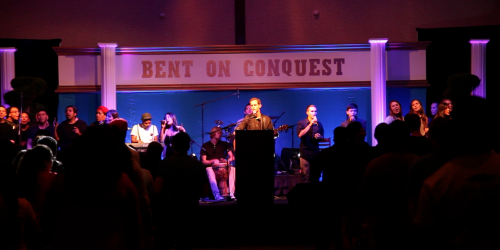
Last week marked the ninth annual ICMC since it's revival in 2005. This year the conference met on both the west coast and east coast of the United States simultaneously. Between San Diego, California and Orlando, Florida about 2,700 college students attended the conference. Amongst that number at least four countries were represented--truly keeping the "I" in "ICMC" (an international experience). While each city centered its classes around the theme "Bent on Conquest" (from Revelation 6:2) they celebrated their time together with different events.
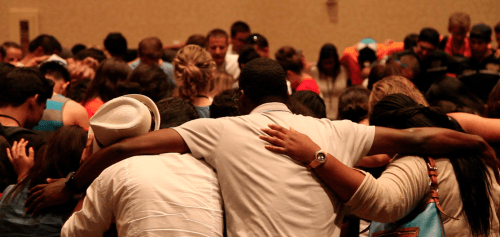
On Wednesday night in Orlando, the ICMC teamed up with HOPE worldwide to hold a benefit concert called "Celebrate Freedom." The concert raised $3,200 to enable over 180 children in Africa to attend school. Learn more here:
Celebrate Freedom Concert
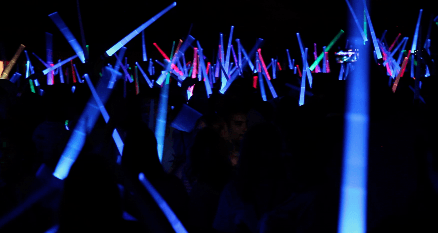
On Saturday morning the conference in San Diego broke a world record: the world's largest lightsaber battle. In one large hall at the Marriot Hotel, the campus ministries fought each other (lovingly) with 1,200 lightsabers, 200 more than the previous record. After the battle, all of the lightsabers were donated to orphans. Later that night they held a semi-formal dinner and dance in the same room. The hotel laid out a decent sized dance floor for the students, but they probably didn't expect as many students to participate. Once the floor opened, so many disciples jumped in that almost every square foot of dance floor was taken up for the next two hours.
There is much more to say. ICOC HotNews is currently working on a full news video to cover the event. Check back frequently to find out more.
More from the International Church of Christ

Imagine you are at a neighborhood barbecue. Your new neighbor arrives late, dressed casually, and barely speaks. Someone whispers, “She thinks she’s too good for us.” You feel the quick sting of that snap judgment. Later, you learn she just lost her husband and is quietly grieving. In that moment, you sense the discomfort of judging wrongly, a rush to conclusions that harms relationships and reveals more about our own hearts than the other person. Yet, the same evening, when another guest makes a racist joke, you feel an inner nudge to speak up. Is that also “judging”? This everyday tension captures what Jesus presents in Scripture: a divine balance between grace-filled restraint and righteous discernment. The two commands in tension “Do not judge, or you too will be judged.” – Matthew 7: “Stop judging by mere appearances, but instead judge correctly.” – John 7:24 At first glance, these seem contradictory. Don’t judge. Judge correctly. Which is it? Matthew 7 warns against a critical, hypocritical spirit that condemns others while ignoring our own faults. The context continues: “For in the same way you judge others, you will be judged, and with the measure you use, it will be measured to you” (Matthew 7:2). Jesus then uses the vivid image of someone with a plank in their own eye trying to remove a speck from another’s. Notice the aim: “then you will see clearly to remove the speck.” Self-examination is not a reason to stay silent. It is how we become safe enough to speak (Matthew 7:3-5). John 7, however, shows Jesus defending his healing on the Sabbath. He challenges the religious leaders: stop superficial, appearance-based judgments and instead apply right, truthful judgment aligned with God’s character and Word. This is not a contradiction but a divine tension, two truths that must be held together. We are called to humility and self-examination (do not judge harshly or hypocritically), while also exercising discernment and moral clarity (judge correctly, according to truth). Christianity rejects both naive permissiveness (“anything goes, no one can say anything”) and harsh legalism (constant condemnation without grace).

Here are answers to some frequently asked questions about next year’s trip to Mt. Kilimanjaro.
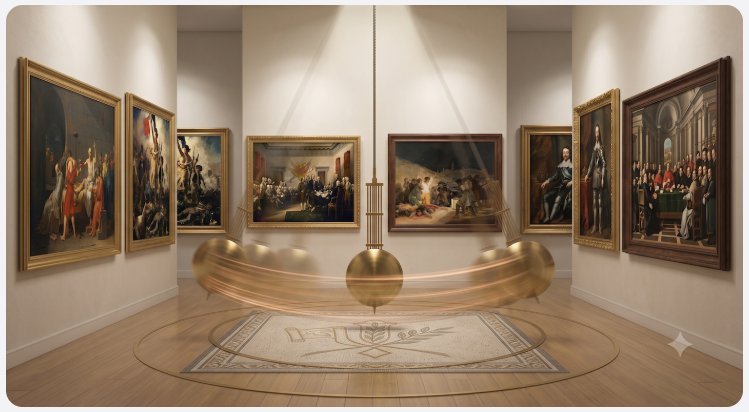
The physics of the pendulum Picture an old grandfather clock in a quiet hallway. Its long brass pendulum swings steadily: tick, tock, tick, tock. Now give that pendulum a hard shove to the right. It does not simply glide back to the center and stop. It races right past the middle and sways just as far to the left. Left to its own momentum, a pendulum never rests at either extreme; it finds peace only when it hangs still at the center, held by gravity and its fixed point. The church behaves in much the same way. Push her too far toward one side of a truth and she does not gently settle into balance, she swings. Often for a whole generation toward the opposite error, and then back again, wounding people at both ends of the arc. And here is the crucial thing the clock teaches us: the pendulum comes to rest not by being frozen in place, but by being held. Balance is not the absence of force; it is the fixed point that keeps opposing pulls in tension so that the weight can finally hang still.